Forest Fires
Back to: Environment North America
Forest Fires Back to: Environment North America |
|
| Forest fires are natural, although the ones started by people have added to their frequency, and global warming is adding to their intensity. Fires are mostly a problem when they destroy human structures; for the forest ecosystem itself they are part of a healthy cycle. The "Fire-Industrial Complex" that tries to stop forest fires is both ineffective and harmful; most fires go out on their own, depending on wind conditions, and the chemicals that are used to suppress them are toxic. Firefighters are sometimes heroic without a doubt, but it's like the war in Vietnam: people can be heroes in a campaign that's fundamentally wrong. Those who build their houses in forests need to take appropriate steps to protect themselves, and otherwise most fires should be left alone. Ancient forests do not burn as intensively as "managed" ones, especially tree plantations, and thinning has limited value. Fires have become a cynical excuse for more logging, when logging is mostly the problem. |
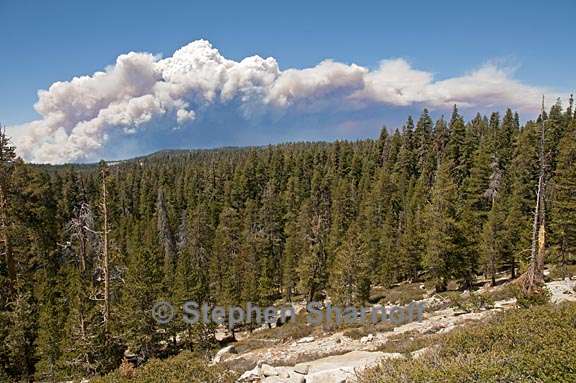
Image 1: Smoke from the Rim Fire, on the edge of Yosemite National Park, 2013 Photo taken from Highway 120 above Crane Flat, within the Park.
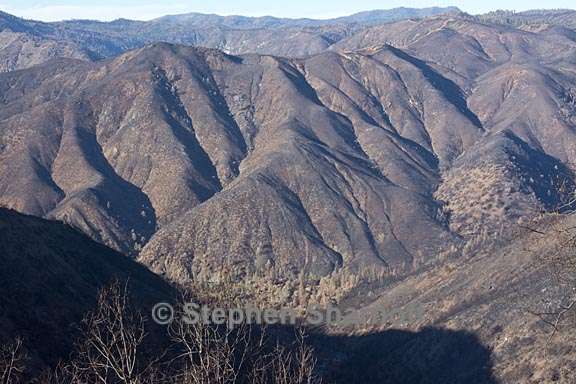
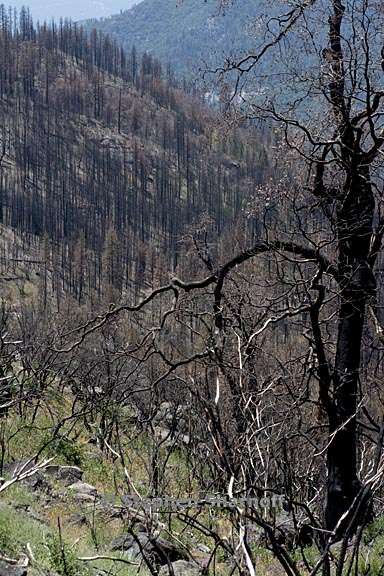
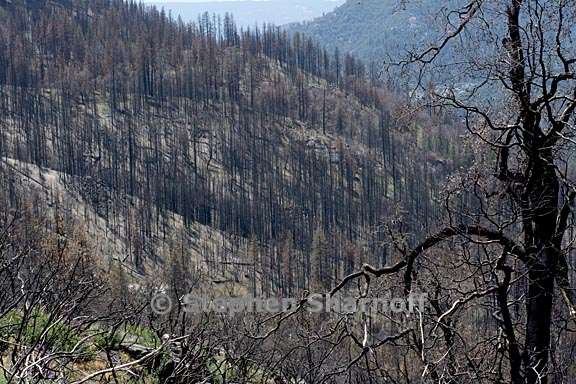
Image 2: Aftermath of the Rim Fire. Photo taken along Highway 120, Rim of the World viewpoint, Nov., 2013.These mountainsides used to be covered in chaparral at the lower elevations and timber up higher.
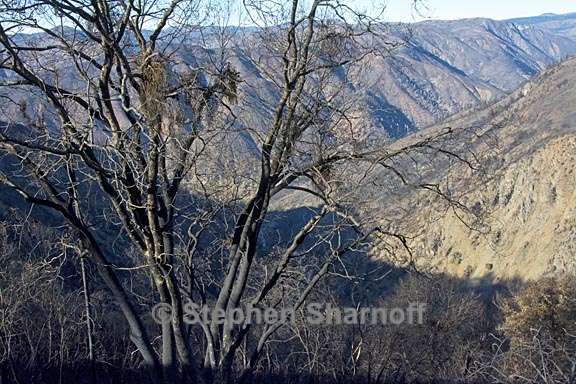
Image 3: Aftermath of the Rim Fire. Photo data as above.
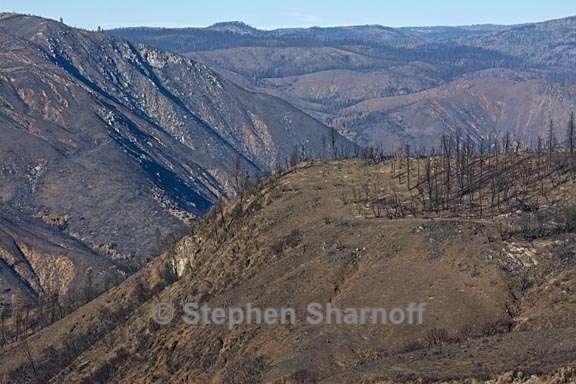
Image 4: Aftermath of the Rim Fire. Photo data as above.
Image 5: Aftermath of the Rim Fire. Photo taken along Highway 120, November, 2013. The bright green is fire retardant.
Image 6: Aftermath of the Rim Fire. Photo data as above
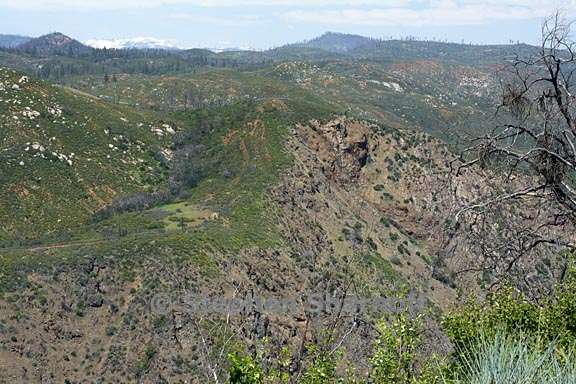
Image 7: The Rim Fire zone, viewed from the Rim of the World Viewpoint
Image 8: The Rim Fire zone, viewed from the Rim of the World Viewpoint
Image 9: The Rim Fire zone, viewed from the Rim of the World Viewpoint
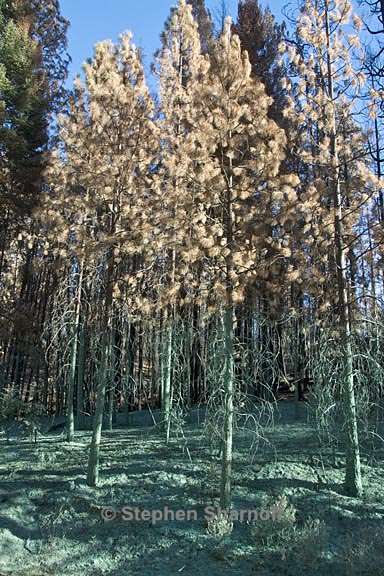
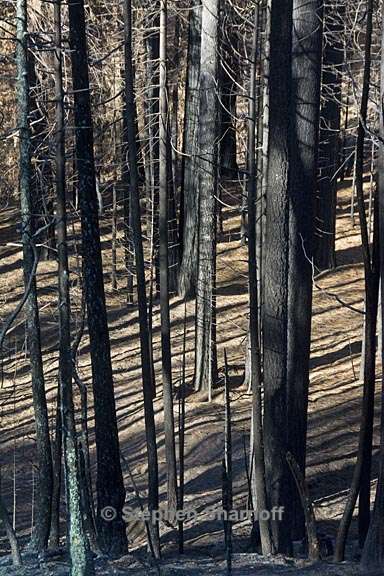
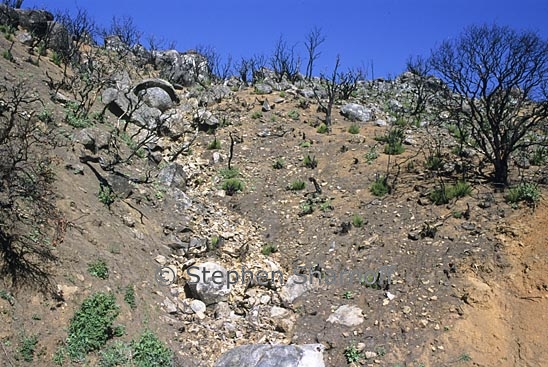
Image 10: Aftermath of the Aspen Fire in California's Sierra Nevada.
Image 11: Aftermath of the Aspen Fire in California's Sierra Nevada.
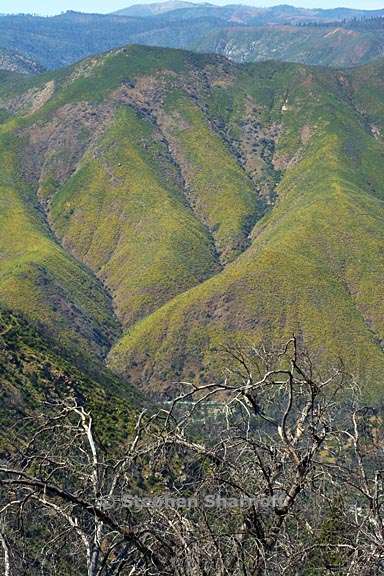
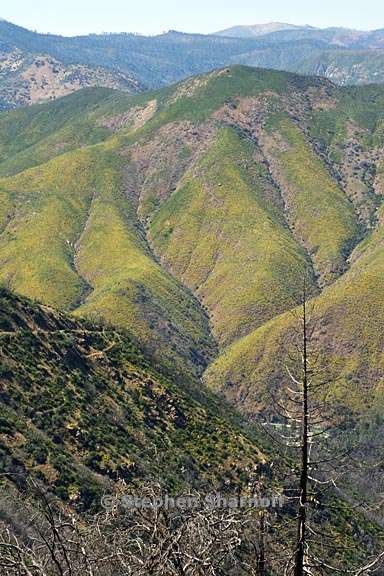
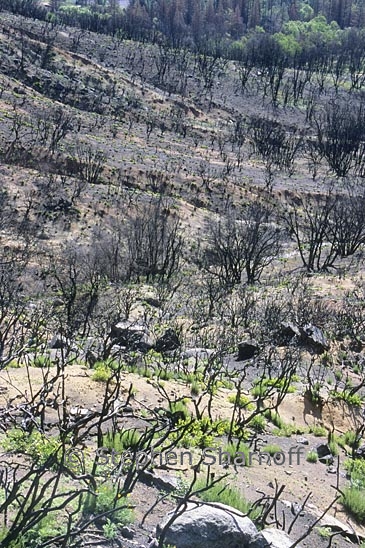
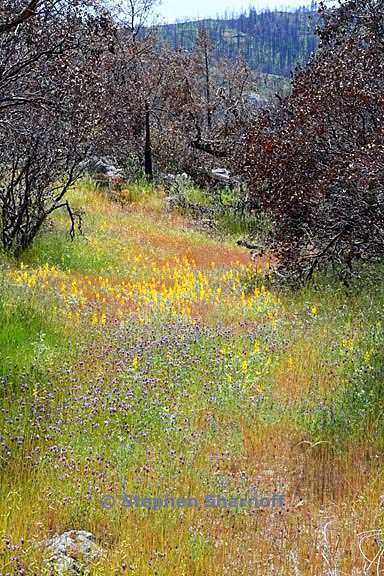
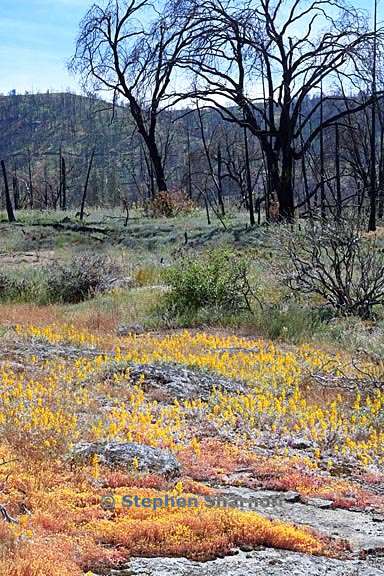
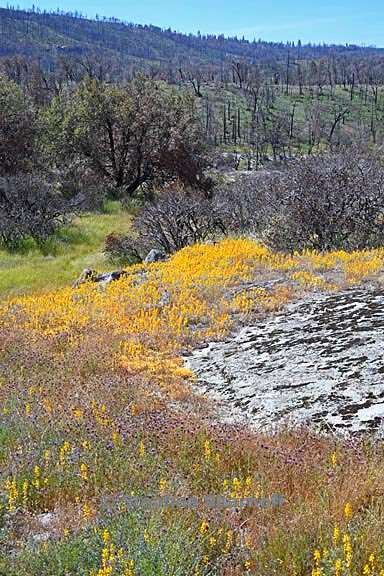
Image 12: Burned area in the Sierra Nevada foothills with new growth coming up.
Image 13: Burned area in the Sierra Nevada foothills with new growth coming up
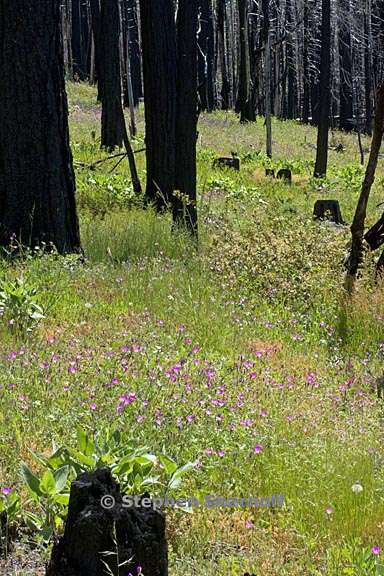
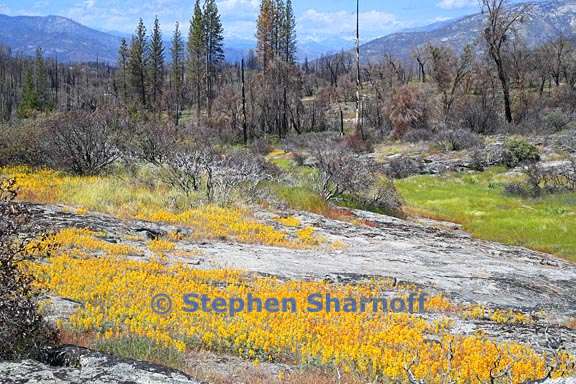
Image 14: A few years after this fire in the Sierra Nevada, native plants are flourishing
Image 15: A few years after this fire in the Sierra Nevada, native plants are flourishing
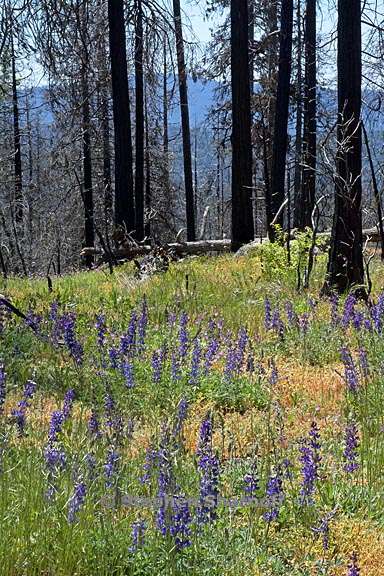
Image 16: In the second year after the Creek Fire burned through Jose Basin in Sierra National Forest, grasses and flowers are returning. In the foreground is Lupinus citrinus var. citrinus.
Image 17: In the second year after the Creek Fire burned through Jose Basin in Sierra National Forest, grasses and flowers are returning.
Image 18: In the second year after the Creek Fire burned through Jose Basin in Sierra National Forest, grasses and flowers are returning. Pictured are Sedilla sp. in the forground, with Lupinus citrinus var. citrinus further back.
Image 19: In the second year after the Creek Fire burned through Jose Basin in Sierra National Forest, grasses and flowers are returning. |
Back to: Environment North America |
|